
Market Research Course
Most product managers can tell you what customers want. Far fewer can tell you whether the market is big enough, competitive enough, or worth entering at all. Market Research gives you the frameworks to answer those questions.
Watch a free lesson

Who is this course for?
The Business Case Builder
Product managers who need to make a business case for a new product or feature but aren't sure how to structure their research
The New Market PM
PMs entering a new market or launching into an unfamiliar segment who need a repeatable framework to assess opportunity
The Senior PM
Senior PMs and product leaders who want to bring competitive intelligence and customer insight into their roadmap decisions
The Ad Hoc Team
Teams that do ad hoc research but lack a consistent approach to sizing markets, assessing competitors, and packaging findings for leadership
The Data-Driven PM
Product managers who want to go beyond gut feel and ground their product strategy in data
AI accelerates. You still need to know your market.
You can execute flawlessly and still end up in the wrong market. Melissa Perri, founder of Product Institute, calls this the Build Trap — when companies keep shipping without validating whether the opportunity is real. The problem is rarely effort. It's that no one asked: is this market big enough, competitive enough, and worth pursuing at all?
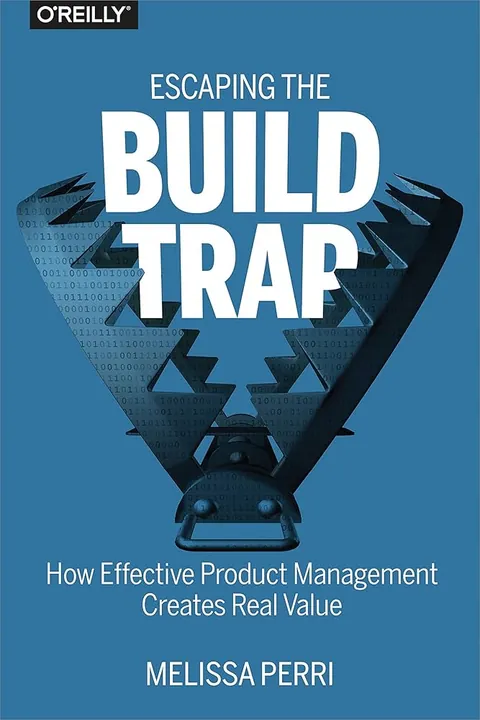
Escaping the Build Trap
Why product organizations default to output over outcomes, and what it takes to break the pattern.
What students walk away with
So you can quantify the opportunity, assess whether it's worth pursuing, and make a business case leadership can act on.
Size any market using TAM, SAM, and SOM — and use those numbers to make a credible business case.
Run a competitive analysis that identifies Blue Ocean spaces, not just a list of competitors.
Conduct a SWOT analysis that connects your product's strengths to real market opportunities.
Design a customer research approach that generates both qualitative insight and quantifiable data.
Package your findings into a clear business case that executives can act on.
The Market Research curriculum
Eight units that build from first principles to a finished business case. Each lesson is short enough to fit around your working day, and every unit comes with a hands-on canvas you can apply to your own product immediately.
- Introduction to Market Research
- Course Glossary
- Further Reading & Activities
- Unit 1: Quiz for Understanding
- How to Design Your Market Research
- Designing Research with Business Case Arguments
- Further Reading & Activities
- Unit 2: Quiz for Understanding
- How to Size a Market — Part 1
- How to Size a Market — Part 2
- Calculating TAM, SAM, and SOM
- Further Reading & Activities
- Unit 3: Quiz for Understanding
- How to Conduct a SWOT Analysis
- Identifying & Analyzing Your SWOT
- Further Reading & Activities
- Unit 4: Quiz for Understanding
- How to Conduct a Competitive Analysis — Part 1
- How to Conduct a Competitive Analysis — Part 2
- Approaching Competition with Blue Ocean Strategy
- Further Reading & Activities
- Unit 5: Quiz for Understanding
- How to Learn from Customers
- Market Research Question Bank
- Further Reading & Activities
- Unit 6: Quiz for Understanding
- How to Make a Business Case with Market Research
- Map Out Your Business Case
- Further Reading & Activities
- Unit 7: Quiz for Understanding
- Market Research 101 Roundup
- Course Feedback Survey
What's included
Everything your team needs to size a market, analyze the competition, understand customers, and build a data-backed business case.
What our students say
"The course provided a strong foundation and practical frameworks that helped deepen my understanding. I especially appreciated the clear distinctions between market and user research, the emphasis on data-driven decision-making, and the structured approach to SWOT and competitive analysis."
"The materials are presented with easy to apply concepts like the metrics for calculating market size and building a business case. The Blue Ocean canvas is an ingenious method to draw on creative ways to explore the market in a competitive, price-driven environment."
"The market research course directly enables the ability to perform a truly informed SWOT Analysis, turning raw data into decisive strategic business action."
Frequently asked questions about the Market Research course
Market Research 101 is an online, self-paced course for product managers who need a structured way to size a market, assess competitors, understand customers, and build a data-backed business case. It covers all four core research skills — market sizing, SWOT analysis, competitive analysis, and customer research — across 8 units and 13 video lessons.
The course is designed for product managers who need to make a business case for a new product or feature, PMs entering a new market who need a repeatable research framework, and product leaders who want to bring competitive intelligence and customer insight into their roadmap decisions. It is also well suited to anyone who does ad hoc research but lacks a consistent approach to packaging findings for leadership.
User research helps you observe customer behavior and understand their needs to make informed product design decisions. Market research helps you quantify the opportunity — how big the market is, whether it's worth entering, and what it would take to win it — and tie those findings back to a business case. Both matter, and Market Research 101 covers how to use them together.
TAM (Total Addressable Market) is the total revenue opportunity if you captured the entire market. SAM (Serviceable Addressable Market) is the portion of TAM you can realistically reach with your current business model. SOM (Serviceable Obtainable Market) is the share of SAM you can capture given your resources and competition. Market Research 101 covers both top-down and bottom-up approaches to market sizing, and includes a downloadable canvas to walk you through the calculation for your own product.
A SWOT analysis is a strategic framework for assessing your product's Strengths, Weaknesses, Opportunities, and Threats relative to the market. In product management, it helps you identify where your product is well positioned to meet a market need, flag risks before they become problems, and connect your findings to a broader strategy. Unit 4 of the Market Research course walks you through how to run one and interpret the results.
A competitive analysis is a structured review of the direct and indirect competitors in your market, used to identify gaps, threats, and opportunities. In Market Research 101, you learn how to map your competitive landscape, apply the Blue Ocean Strategy framework to spot underserved spaces, and use your findings to inform product positioning. Most PMs research competitors informally — the course gives you a repeatable process.
Blue Ocean Strategy is a framework for identifying market spaces that are uncontested or underserved — where you can create demand rather than compete for existing demand. In contrast to "red ocean" strategies that involve fighting over the same customers as established players, a blue ocean approach means finding a gap competitors have overlooked. Unit 5 of the Market Research course covers how to use the Blue Ocean Strategy canvas to map your competitive landscape and spot those opportunities.
A strong product business case draws on four things: evidence that the market opportunity is real (TAM/SAM/SOM), an analysis of the competitive landscape and available space, an honest assessment of your product's ability to meet the need (SWOT), and a clear recommendation for a path forward. Unit 7 of the Market Research course covers exactly this — how to take your research findings and organize them into a business case you can present to leadership.
The course has 8 units and 13 video lessons, each around 10 minutes. Most students complete it over 4–6 weeks alongside their full-time role. You have 12 months' access with no deadline, so there is no pressure to rush — and you can revisit any lesson, canvas, or activity any time.
The course was created by Melissa Perri, Founder of Product Institute and author of Escaping the Build Trap (O'Reilly Media). Melissa has taught product management at Harvard Business School and advised Fortune 500 product organizations worldwide. 19,801 product professionals have taken courses at Product Institute.
Ready to find the opportunities
worth pursuing?
Join 16,553 product professionals who've built stronger market research skills with Product Institute.
"The Market Research course helped me to look at my product from a different perspective and think about how market research can help me to craft a business case."