
Metrics Course
Most teams track plenty of metrics. The problem is knowing which ones to act on, which to ignore, and how to talk about them in a way that actually changes behaviour. The Metrics course gives you a structured framework to choose, use, and communicate metrics that drive decisions.
Watch a free lesson

Who is this course for?
The Working PM
Product managers who track plenty of metrics but struggle to choose which ones actually drive decisions
The Senior PM
Senior PMs and product leaders looking for a structured framework to evaluate any metric with confidence
The Enterprise Team
Enterprise product teams who need consistent OKRs, KPIs, and success criteria across multiple teams and squads
The Product Leader
Product leaders tired of debates about OKRs vs KPIs — and ready for a framework that makes the distinction clear
The Organization
Organisations building a shared measurement language so every team understands what good looks like
AI accelerates output. It doesn't guarantee outcomes.
When teams can ship twice as much and twice as fast, measuring the wrong outcomes doesn't slow you down. It accelerates you in the wrong direction. Melissa Perri named this pattern in Escaping the Build Trap. AI has made that trap easier to fall into. The teams that win in an AI-accelerated world are the ones who still do the foundational work — setting clear success criteria, tracking metrics that reflect real progress, and using data to make evidence-based decisions.
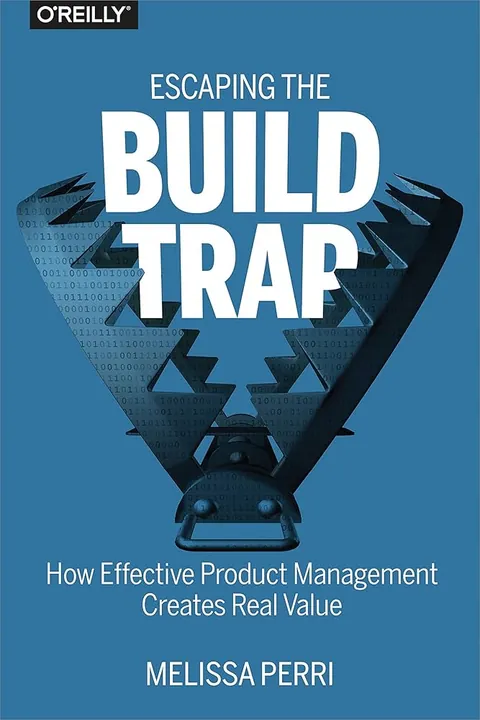
Escaping the Build Trap
Why product organizations default to output over outcomes, and what it takes to break the pattern.
What students walk away with
When product teams share a common framework for choosing and evaluating metrics, decisions get faster, and alignment gets easier.
Identify which metrics serve your product — and which do more harm than good.
Apply six metric lenses to evaluate any product, team, or business context with confidence.
Segment your customers to understand not just what to measure, but who you're measuring it for.
Present metrics clearly to any audience — executives, teammates, and peers — in the language each needs.
Recognise where metrics fail and avoid the traps that lead good teams in the wrong direction.
The Metrics course curriculum
Bite-sized lessons you can fit around your working day. Most students complete the course in 4–6 weeks and keep the metric lenses and templates to hand long after.
- What are Metrics & Why are They Important
- Activity: Assess Your Metrics
- Course Glossary
- Unit 1: Quiz for Understanding
- What Makes a Good Metric
- Activity: Run a Metrics Pre-Mortem
- Segments & Cohorts
- Activity: Identifying Segments and Cohorts
- Frameworks That Use Metrics
- Activity: Mapping Metrics to Frameworks
- Unit 2: Quiz for Understanding
- The Process Metrics Lens
- Activity: The Accelerate Metrics
- The Product Metrics Lens
- Activity: Breaking Down Product Metrics
- The Quality Metrics Lens
- Activity: Finding Proxy Metrics for Customer Satisfaction
- The Commercial Metrics Lens
- Activity: Building a Revenue & Cost Mind Map
- The Market Metrics Lens
- Activity: The Market Metrics Lens
- The Strategic Metrics Lens
- Activity: Writing OKRs
- Unit 3: Quiz for Understanding
- Communicating Metrics
- Activity: Communicating Metrics
- Using Metrics With Your Team
- Activity: Metrics Meetings Worksheet
- Where Metrics Fail
- Activity: Finding Mutually Destructive Pairs
- Unit 4: Quiz for Understanding
- Metrics Roundup
What's included
Everything your team needs to pick the right metrics, avoid common traps, and use data to drive better product decisions.
What our students say
"A brilliant, systematic framework for asking the right metric questions. I now have a clear structure for identifying the metrics that truly matter — whether they are the ones I set, I need to understand, or I must meet. This foundational understanding is essential for any PM aiming for data-driven product mastery."
"The material was broken down into concise sections of information, each very useful and conducive to wanting to know more. I found myself wanting to start workshops with my team with many of the Metrics worksheets."
"What an eye opening course! I used to be one of those managers that believed that metrics were just dashboards with data. Now I'll have a completely different approach to them."
"This course really helped frame metrics for me through the various metric lenses. I have a better understanding of how to think critically to make sure my team is tracking the right metrics at the right time."
"This course took what I already knew about product management metrics and elevated my understanding to a more organised and thoughtful approach."
"As a person new to product management this course helped me understand how metrics help in product decisions and how to collect them."
Imagine if everyone on your product team was working towards the same goals.
When everyone defines success differently, alignment is a constant negotiation. Every metric becomes political. Every priority conversation becomes a debate. A shared framework changes that — giving your team a common language for what good looks like, so decisions get faster and alignment stops being a full-time job.
Enterprise training
Train hundreds of product people in one go, with no disruption to day-to-day work
LMS tracking
Managers can monitor progress and quiz results across the whole team
Trusted by Kaiser Permanente, US Bank, Sam's Club, Bloomberg and more

Frequently asked questions about the Metrics course
Yes — especially so. Most PMs have some familiarity with frameworks like HEART and Pirate Metrics, but familiarity is not the same as having a structured approach to choosing the right metrics for any context. Many students arrive knowing frameworks in isolation but without a clear system for deciding when to use each. The course introduces six metric lenses that give you a structured way to evaluate any metric — not just the ones your organisation already tracks.
The Metrics course is an online, self-paced course for product managers and product leaders who want a structured framework for choosing, evaluating, and communicating metrics. It covers what makes a good metric, how to apply six metric lenses across any product context, how to work with customer segments and cohorts, and how to communicate data in a way that drives decisions.
The course is designed for product managers who track metrics but struggle to choose which ones to act on, product leaders looking for a structured framework, and enterprise teams who need consistent OKRs, KPIs, and success criteria across multiple teams. It is also well suited to anyone transitioning into a more data-driven product role.
OKRs (Objectives and Key Results) and KPIs (Key Performance Indicators) are often used interchangeably — but they serve different purposes. KPIs measure ongoing health and performance, giving you a continuous read on how the product or business is doing. OKRs define where you are trying to go and how you will know you have arrived. The Metrics course covers both within the Strategic Metrics Lens unit, helping you understand the OKRs vs KPIs distinction, when to use each, and how they fit together within your broader metrics framework.
Input metrics measure the actions and activities your team takes — what you put in. Output metrics measure the results of those actions — what comes out. Output metrics alone, like revenue or retention, are often lagging indicators that only tell you what happened after it is too late to change course. The Metrics course teaches you to identify leading indicators — input metrics that signal future outcomes — so you can act before problems surface in your output data. TrackCo's story in the course is a vivid example of what happens when a team relies only on lagging indicators.
Yes. While many metrics resources focus exclusively on quantitative data, the Metrics course addresses qualitative metrics through the Quality Metrics Lens — covering customer satisfaction, proxy metrics, and quality indicators. You will learn how to find useful proxies for things that are hard to measure directly, and how to combine qualitative and quantitative signals to build a fuller picture of your product's performance.
None. The Metrics course focuses on the thinking and frameworks behind good metrics practice — how to choose the right metrics, evaluate them across six dimensions, and communicate them effectively. It is not a course in specific analytics tools for product managers. The frameworks apply regardless of whether your organisation uses Mixpanel, Amplitude, Google Analytics, or a custom data stack.
Yes. As AI tools make it faster and cheaper to build and ship, knowing which metrics signal real progress becomes more critical, not less. The course frameworks apply directly to AI products — including how to set meaningful success criteria when outcomes are harder to predict, how to use quality metrics to evaluate AI-generated outputs, and how to communicate progress to stakeholders in a way that reflects actual value rather than just usage volume.
The course has 5 units and 32 bite-sized lessons, each around 10 minutes. Most students work through it over 4–6 weeks alongside their full-time role. You have 12 months' access with no deadline, so there is no pressure to rush — and you can revisit any lesson, template, or activity any time.
Yes. Enterprise teams often roll out the Metrics course to build a shared metrics framework across their organisation. When everyone on the product team is evaluating metrics through the same lenses and working from the same definitions of success, decisions get faster and cross-team alignment gets easier. Most teams also choose to bundle the Metrics course with PM Foundations or our full product catalogue. Talk to our team about group licensing and LMS integration.
The course was created by Melissa Perri, Founder of Product Institute and author of Escaping the Build Trap (O'Reilly Media). Melissa has taught product management at Harvard Business School and advised Fortune 500 product organisations worldwide. 16,652 product professionals have taken the Metrics course.
Ready to start measuring what actually matters?
Join 16,652 product professionals building a stronger metrics practice with Product Institute.
"Great course, I feel more equipped to implement changes in what metrics we use and how we use them."